
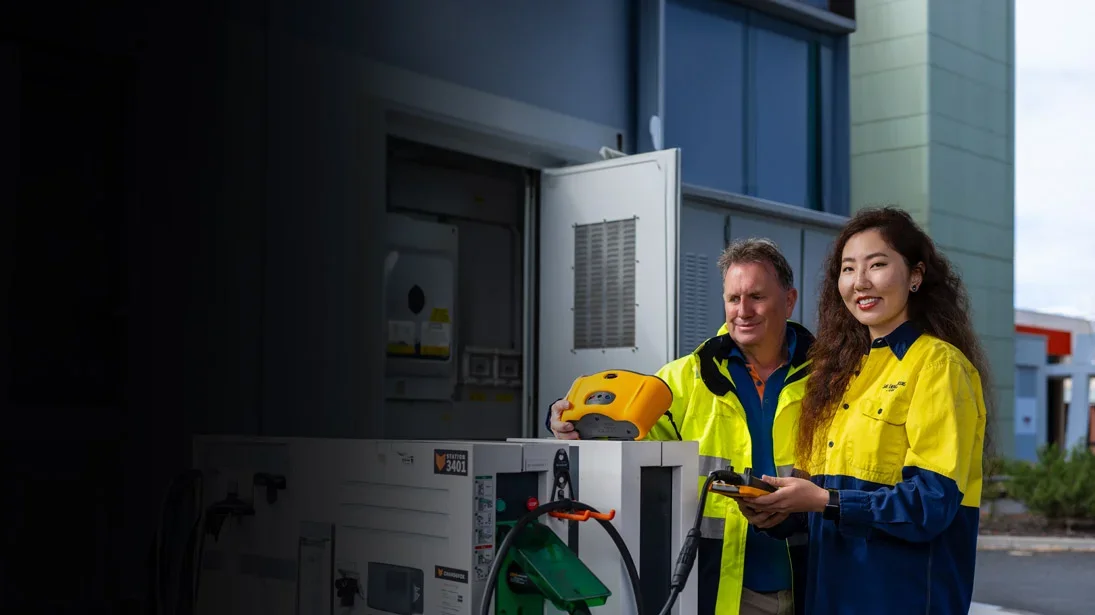
The transition to clean and renewable energy presents significant opportunities to build a workforce ready for new energy occupations. According to the Clean Energy Council’s Clean Energy Australia 2025 report, Australia experienced record investment in 2024, with $12.7 billion committed to clean energy projects. This growth, driven by rooftop solar, battery storage and wind generation, has created strong demand for skilled workers. With government incentives now available, more employers are well positioned to benefit from the expansion of this sector.
What are Clean Energy Jobs?
Clean energy apprenticeships cover job roles that design, develop, construct, operate, store, transmit and distribute energy infrastructure based on renewable or low-emission sources. These also include positions that reduce or manage energy use, and those involved in the installation or maintenance of clean energy technologies rather than fossil fuel systems.
Many existing businesses in construction, electrical trades, manufacturing, HVAC, automotive and facilities management already perform work that overlaps with these functions. However, they may not recognise that these roles qualify for electrical or clean energy apprenticeship programs.
The rapid growth of distributed energy systems, such as rooftop solar and battery storage, is also fuelling demand for smaller-scale installation and maintenance roles that align with these industries. Apprenticeships in new energy therefore provide a powerful means to future-proof the workforce and strengthen business capability.
Closing the gap on skills shortage
Like many industries, the clean energy sector faces constraints due to shortages of electricians, electrical engineers, mechanical tradespeople and system design and integration engineers. Traditional trades training often lacks modules dedicated to renewable energy systems, battery technologies, grid integration or energy efficiency controls. A specialist apprentice support provider can work with employers to select a training provider that can provide training in the latest new energy systems.
Awareness levels pose another challenge as many employers are unaware that existing roles within their organisations qualify for new energy apprenticeships or how to incorporate them effectively. Supporting supervisors, managers and current staff to mentor apprentices in energy-specific tasks also requires time and planning.
Benefits to employers
The Australian Government’s Key Apprenticeship Program offers up to $10,000 in financial support to apprentices commencing or recommencing their careers in the clean energy sector.
Yet, the value to employers extends far beyond financial incentives. Having staff trained in clean energy systems enables businesses to tender for renewable energy projects, diversify services and explore more profitable areas of work.
Businesses that build clean energy capability are better placed to stay relevant in a rapidly changing market. This reputation can attract new clients, investors, tenders and employees who value sustainability and innovation. Apprentices trained in clean energy bring fresh knowledge, adaptability and creativity, giving businesses greater influence over the skills they develop internally.
More skills, more growth
The transition to clean energy represents both a challenge and an exceptional opportunity for forward-thinking employers. With the momentum highlighted in the Clean Energy Australia 2025 report and the forecast demand for skilled workers, investing in new energy apprenticeships today is not only strategic but essential for industries aiming to thrive in a low-emissions future.